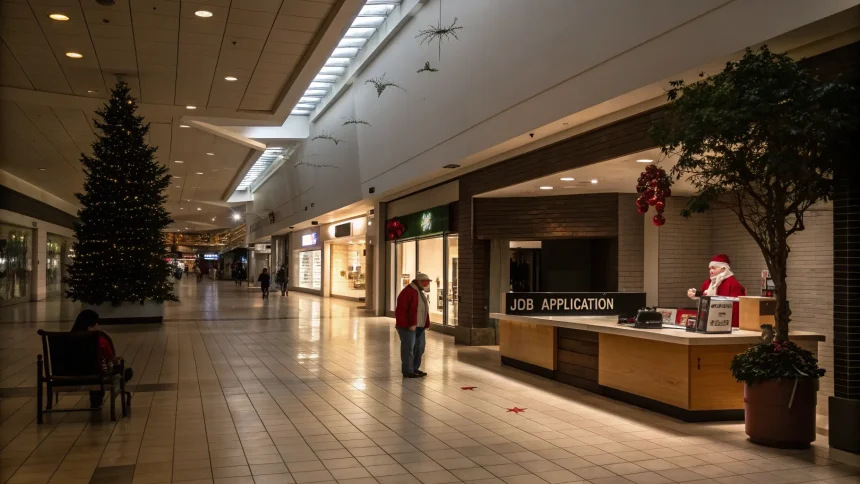
Reports of slower demand for professional Santas and holiday workers are stirring fresh questions about the economy. Bookings for festive events, mall photo ops, and pop-up gigs appear softer than last year in some markets. The worry is simple: if the holiday jobs machine is cooling in November and December, is a broader downturn underway?
The concern surfaced in a recent discussion when one host asked, “Demand for professional Santas and other seasonal workers seems to have cooled. Could that be a sign we’re in a recession?” The short answer from labor economists: not necessarily, but it is worth watching alongside other signals.
Why Holiday Hiring Matters
Seasonal hiring is a traditional gauge of consumer activity. Retailers, delivery companies, grocers, restaurants, and entertainment venues typically add workers to meet holiday traffic. Santa performers sit at the intersection of retail foot traffic and corporate entertainment budgets. When these bookings slow, it can reflect weaker store visits, tighter marketing budgets, or shifting consumer habits.
Historically, retailers have added hundreds of thousands of jobs during November and December. But the pattern has been changing for years. Online shopping spreads demand over a longer period, and logistics hiring often starts earlier in the fall. Automation at warehouses and self-checkout at stores also reduce the need for last-minute staffing. That makes year-over-year comparisons tricky.
Santa Bookings Are a Narrow Signal
Santas and holiday entertainers rely on malls, photo studios, community centers, and company parties. If corporate events tighten or malls see fewer visitors, bookings can drop even if broader consumer spending holds up. Insurance costs, venue availability, and higher costume and travel costs can also limit gigs. A slower calendar in one city may be offset by stronger demand in another.
“Demand for professional Santas and other seasonal workers seems to have cooled. Could that be a sign we’re in a recession?”
Economists caution against reading too much into a single niche. They note that lower bookings could result from planning changes. Some retailers locked in holiday staff earlier. Others shifted budgets to digital campaigns rather than in-person events.
What the Data Can and Cannot Say
The best way to judge recession risks is to look at a broad set of indicators. Monthly jobs reports from the Bureau of Labor Statistics (BLS), unemployment claims, and retail sales show a clearer picture than any one gig market. The BLS Job Openings and Labor Turnover Survey (JOLTS) offers a view on demand across retail and leisure industries.
Holiday forecasts from major trade groups and card-spending trackers can also give timely hints. But those figures often come with caveats, including price changes from inflation and calendar quirks.
- Payroll growth in retail and transportation during November and December
- Weekly initial unemployment claims into January
- Credit and debit card spending trends through New Year’s
- Store traffic and e-commerce volumes during key shopping weekends
- Wage postings for short-term retail and event roles
Shifts Behind Softer Seasonal Demand
Several structural changes can make this season feel cooler without signaling a recession. Retailers have pulled forward discounting and inventory planning, reducing the need for last-minute hires. Delivery networks are more efficient, so peak demand creates fewer short-term spikes. Consumers are also spreading purchases across weeks of deals rather than one or two surges.
Event calendars have changed as well. Some companies trimmed in-person parties or replaced them with smaller gatherings. Family budgets remain sensitive to higher prices for travel and dining, which can limit photo sessions and paid events.
Workers on the Ground
Seasonal workers report fewer shifts in some markets and tighter scheduling in others. Many mention higher competition for mall roles and photo staff, with employers preferring experienced workers who can handle irregular hours. For Santas, the season is short, so a few cancellations can make a big difference in income.
At the same time, workers are finding more flexible online roles and delivery gigs. That can pull potential applicants away from traditional retail and event work, making demand appear softer even when households are still spending.
Bottom Line on Recession Risk
A quieter season for Santas and holiday hires can hint at softer foot traffic or tighter corporate budgets, but it is not proof of a downturn. Analysts will be watching the November and December jobs reports, weekly jobless claims, and retail spending to gauge the trend.
For now, the signal is mixed. Slower bookings may reflect the ongoing shift to early promotions, online shopping, and leaner event schedules. If labor demand weakens across retail, transportation, and leisure over several months—and if unemployment claims rise—that would be a stronger warning. Until then, a cool holiday hiring season is a yellow light, not a red one.