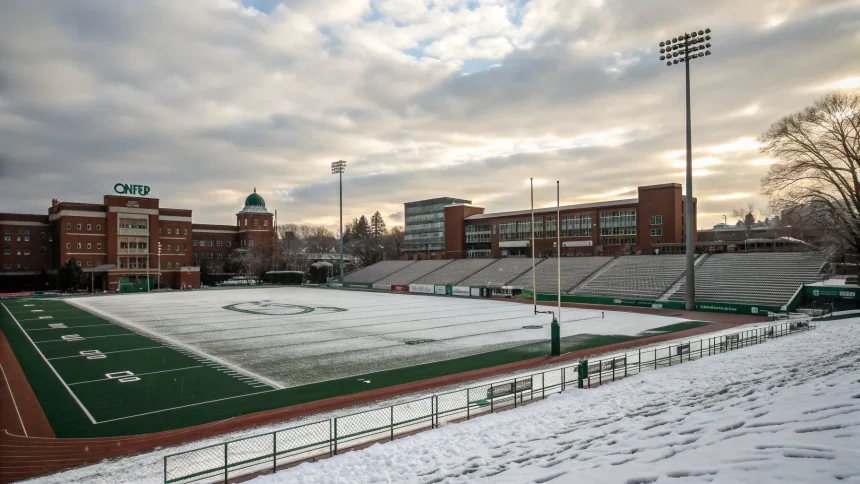
Ohio University has dismissed head football coach Brian Smith after citing “serious professional misconduct,” ending his tenure amid the critical winter recruiting window. The coach had been placed on indefinite leave on December 1 as the school reviewed the matter. The decision leaves the program without a permanent leader as it navigates transfers, recruiting, and off-season planning.
The university did not release details about the alleged misconduct. The move arrives at a time when roster decisions and commitments often set the tone for an entire season. It also raises questions about what the program does next to steady players and reassure recruits.
Ohio University attributed the dismissal to “serious professional misconduct.”
What We Know And What’s Next
Smith’s removal follows a period of leave that began December 1. The school has not announced a permanent replacement or an interim coach. That uncertainty can ripple through a college roster quickly.
- Dec. 1: Smith placed on indefinite leave.
- Announcement: Dismissal for “serious professional misconduct.”
- Next steps: Interim leadership and coaching search not yet disclosed.
Programs often tap an assistant to handle day-to-day duties while a search begins. Without a public plan, players and recruits are left reading tea leaves during a high-stakes stretch of the calendar.
Timing Magnifies The Stakes
The early signing period for high school seniors typically arrives in mid-December, compressing decisions for prospects and staff. The FBS transfer portal window also opens in early December. That gives players a short span to evaluate their future.
Coaching turnover in December is common, but the compressed schedule can magnify its impact. Roster continuity, strength and conditioning plans, and off-season install work often start in January. A delay in naming leadership can slow those efforts.
Recruits usually build relationships with position coaches and coordinators, but the head coach’s status still matters. Parents ask a basic question: Who will be in charge come spring ball? Until Ohio outlines a plan, it’s hard to offer a clean answer.
Policy, Contracts, And Procedure
Universities typically handle allegations of professional misconduct through a coordinated process with human resources, legal counsel, and athletics compliance. Contracts for head coaches often include “for-cause” and “without-cause” clauses, which dictate pay and separation terms.
A “for-cause” dismissal can void buyouts, depending on the contract language. Schools also weigh NCAA rules, Title IX obligations where applicable, and internal codes of conduct. The breadth of those policies helps explain why the university may say less while a matter is reviewed, even after a decision is reached.
Public institutions also face open-records requests. More information may emerge later through those filings, although privacy and personnel rules can limit what is released.
Impact On Players And Recruits
For current players, leadership changes alter position battles, playbooks, and even nutrition and rehab routines. Veterans may consider the portal if they fear scheme changes or staff turnover.
Recruits commit to a school, but they also commit to a plan. A sudden change forces them to reassess. Some will wait for clarity. Others may look elsewhere if timelines collide with signing day.
Alumni and donors will watch how quickly the university stabilizes the program. A clear interim plan, open communication with players, and swift steps in a coaching search can limit fallout.
The Wider College Football Picture
This episode fits a broader pattern of high-pressure off-seasons. Programs juggle NIL-driven roster decisions, portal timelines, and recruiting cycles that hardly pause. Leadership changes feed that churn.
At the same time, schools are under sharper scrutiny to enforce standards for employees, including coaches. Balancing athletic urgency and institutional accountability is tricky, but unavoidable.
The path forward often includes listening sessions with players, meetings with recruits and families, and a structured search process that sets expectations on culture and compliance from day one.
For Ohio University, the immediate priorities are steadying the locker room and signaling a direction. The key questions now: Who guides winter workouts, how does the staff retain the core roster, and what timeline will the school set for hiring?
The program’s next update will shape the off-season. Clear leadership, even on an interim basis, could calm nerves and keep commitments intact while a long-term decision is made.