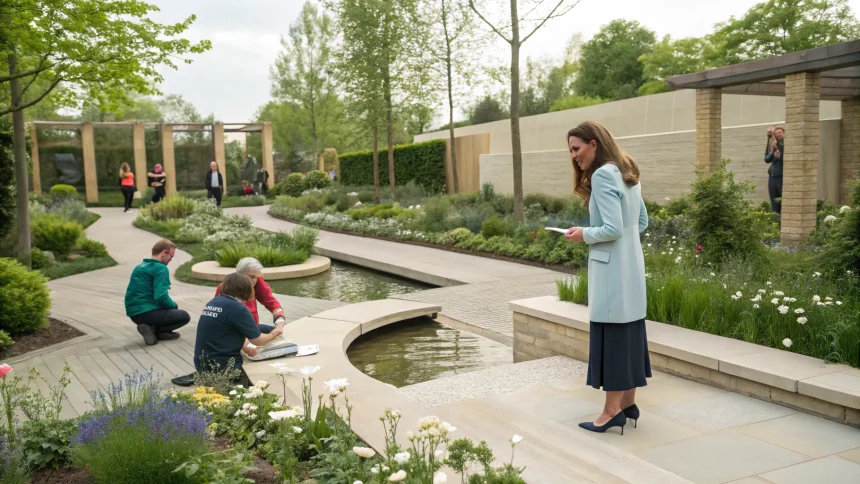
The Princess of Wales paid a quiet tribute in Chelsea, West London, visiting the Ever After Garden, a space dedicated to those who have died from cancer. Her appearance drew families, volunteers, and charity workers who say the memorial has become a place where grief meets gentle remembrance.
The visit took place in West London, where the Princess met organizers and spent time reflecting at the site. The garden’s focus is simple and powerful: honoring lives lost and supporting the people left behind.
A Place Built For Remembering
Organizers describe the Ever After Garden as a community-led memorial where people can leave messages and remember loved ones. It is designed to be public, accessible, and deeply personal for visitors.
The Princess called it an “incredibly special” place, according to organizers on site.
The event’s purpose aligns with years of work by the Princess of Wales alongside cancer charities and hospital partners in West London. The Royal Marsden in Chelsea, a leading cancer hospital, has often been a focal point for awareness efforts and fundraising in the area.
Memorial spaces like this one have become an anchor for families, especially during winter months, when many look for places to mark anniversaries and share stories. Volunteers say the garden helps turn private loss into shared remembrance, without taking away the intimacy of those memories.
Why The Visit Matters
The Princess’s presence carries weight for cancer patients and their families, many of whom see the visit as a sign that their grief is seen. Public attention helps keep support services in the spotlight and can boost donations to cancer causes.
Health advocates say this matters for a simple reason: the need is large and steady. Cancer Research UK estimates around 375,000 new cancer cases are diagnosed each year nationwide, and more than 160,000 people die from the disease annually. Those numbers translate into thousands of families who rely on bereavement services and community networks.
The Princess has long worked with hospital teams, researchers, and charities, often focusing on early diagnosis, family support, and improved care. Her visit in Chelsea fits that pattern, drawing attention to both remembrance and the living support systems that follow loss.
Voices From The Garden
Visitors described the atmosphere as reflective but hopeful. A volunteer said the garden offers a way to remember loved ones “without having to find the perfect words.” Families often come in pairs or small groups, spending only a few minutes before leaving a note or a small token.
Organizers explained that the memorial encourages visitors to:
- Honor specific people, not just the disease.
- Share a brief message or memory.
- Support local cancer services through awareness and donations.
That mix—private ritual and public support—has helped the site become a steady presence in West London’s calendar of remembrance events.
Connecting Memory To Action
Public memorials can be more than symbolic. Fundraising tied to remembrance events has helped charities expand counseling, patient transport, and respite services. Advocates note that these practical supports often make the biggest difference day to day.
Experts also point to the need for sustained investment in early detection and screening programs, which can improve survival rates. Awareness campaigns tied to high-profile visits can move people to check symptoms, book appointments, and seek help sooner.
The Princess’s appearance in Chelsea highlights that thread: honor those lost, help those living with cancer, and support the people who care for them.
What Comes Next
Organizers expect steady footfall in the coming weeks as word of the visit spreads. Local charities plan to keep outreach teams nearby to guide visitors, share information on support services, and direct those interested in volunteering.
For families, the garden offers a clear path: a place to remember today, and a reminder to support care and research tomorrow. For charities, the moment is a chance to turn reflection into action—more volunteers, more donations, and more attention to services that meet families where they are.
The visit ends, but the message remains simple. Grief deserves space, care, and company. The Ever After Garden offers that. The Princess’s visit helps keep the door open for everyone who needs to walk through it next.