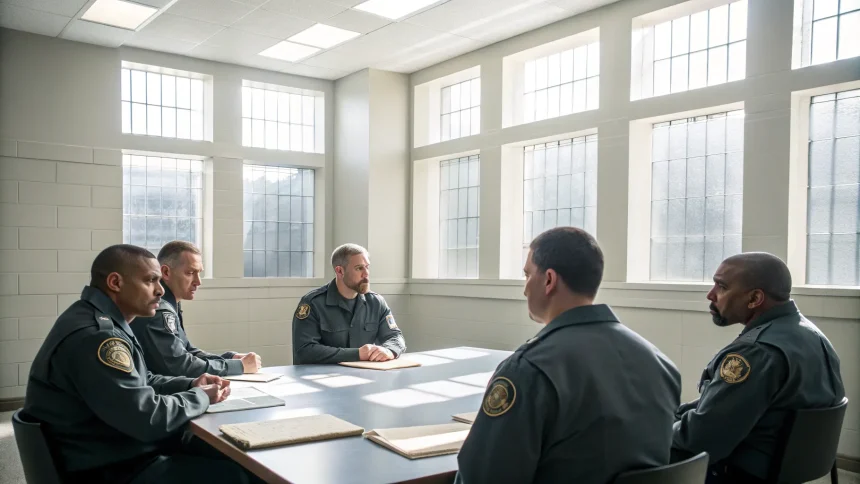
Five California correctional officers accused of sexually assaulting incarcerated people over the last dozen years remain on the state’s payroll, according to a new audit by the prisons’ inspector general. The finding raises fresh questions about accountability inside the California Department of Corrections and Rehabilitation (CDCR), the state’s largest law enforcement agency.
The audit spans a dozen years and focuses on allegations of sexual misconduct by staff. It highlights cases where officers kept their jobs despite serious claims. The report lands as lawmakers and advocates press for stronger safeguards for people in custody.
What the Audit Says
“Five California correctional officers who were accused of sexually assaulting incarcerated people over the last dozen years remain employed by the state,” the state prisons’ inspector general reported.
That single line carries heavy weight. It suggests that, in multiple cases, internal systems did not lead to removal or disqualification. The audit does not detail each case publicly, but it points to gaps in investigations, discipline, or both.
Sexual abuse behind bars is a federal and state priority area. Under the Prison Rape Elimination Act (PREA), prisons must prevent, detect, and respond to sexual misconduct. Still, audits often find slow timelines, incomplete evidence collection, or conflicting witness accounts. Those hurdles can stall or derail discipline.
How Such Cases Persist
Several forces can keep accused officers at work for years. Due process is one. Peace officers in California have specific procedural rights. Investigations must meet strict standards and timelines. Missed deadlines can limit discipline options.
Union agreements and arbitration also shape outcomes. Even when the department seeks termination, arbitrators can reduce penalties. In some cases, an officer can be reinstated with back pay if the process faltered.
Another barrier is evidence. Many incidents happen without cameras, or records are limited. Incarcerated witnesses may fear retaliation. Medical exams can be delayed. All of this can weaken a case.
Inside the Walls, Pressure and Silence
Advocates say the power imbalance in prisons is stark. Staff control movement, communications, and access to medical care. People in custody face high risks for reporting. A single transfer or lost grievance can end a complaint.
One advocate for survivors put it plainly in interviews over the years: policies look strong on paper, but culture decides what happens in practice. Reporting channels exist, but trust is thin. Without fast, fair investigations, cases can fade.
Staff groups counter that accusations can be false or mistaken. They argue that careers and reputations are at stake. They stress the need for credible evidence and warn against punishing on allegation alone. These competing concerns shape every step of the process.
What Reform Could Look Like
The audit’s core finding will likely add fuel to ongoing debates at the Capitol. Lawmakers have already weighed new guardrails for police discipline statewide. Similar tools could extend inside prisons.
- Stronger timelines: Clearer deadlines for investigations and final decisions.
- Independent review: More outside investigators for staff-on-incarcerated misconduct.
- Body-worn and fixed cameras: Expanded coverage in blind spots and faster footage retention.
- Survivor support: Confidential reporting, rapid medical exams, and legal aid for people in custody.
- Public reporting: Regular data on allegations, findings, and discipline, with privacy safeguards.
CDCR has said in past policy statements that the department follows PREA standards and disciplines staff when allegations are sustained. The inspector general’s audit, however, suggests the system still falls short in the most serious cases.
Why It Matters
Trust in custody settings depends on safety. When people believe staff can act with impunity, cooperation drops. That hurts crime reporting, programming, and reentry work. For taxpayers, drawn-out cases mean extended paid leave, legal costs, and settlements.
For victims, the stakes are higher. If an accused officer remains in uniform, fear spreads. Others may stay silent. That silence can hide patterns that only come to light after many years.
The audit’s headline finding is stark: five officers accused of sexual assault remain employed. It points to a gap between policy goals and the on-the-ground reality. The next steps will likely involve tighter timelines, more independent oversight, and more cameras. Watch for legislative hearings, updated CDCR directives, and fresh data from the inspector general. The measure of progress will be simple: faster, fairer cases and clear consequences when the evidence supports them.