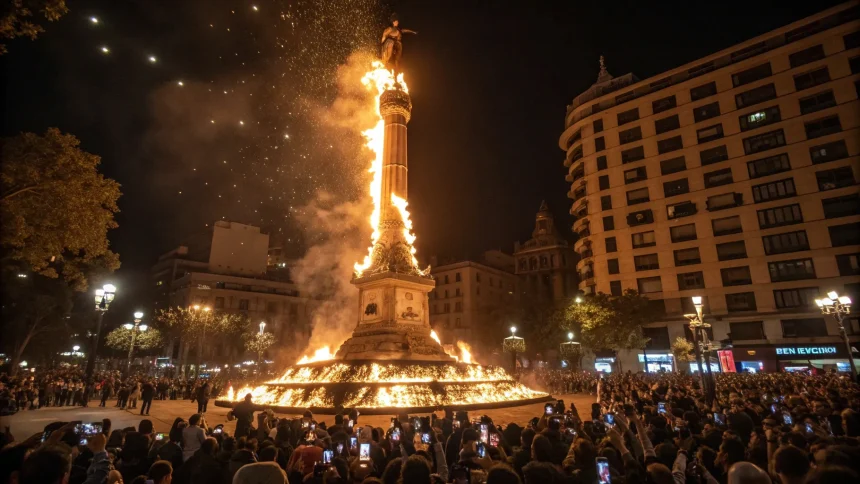
As flames climbed a towering effigy, crowds cheered and phones lit the night sky, marking a public bid to leave hardship behind. The annual burn, held in a city plaza ringed by families and vendors, brought together thousands for a ritual that blends spectacle with a simple message: let go and start fresh.
Attendees said the event offered a chance to share grief and hopes in a common space. Many arrived with written notes about losses, worries, or goals, and watched as the fire carried them away. Organizers framed the gathering as a community reset at the close of summer, with music, dance, and a careful safety plan around the blaze.
“It’s to represent the triumph of good over evil and all bad things and to let go of bad things,” one participant said.
A Public Ritual of Release
The effigy burn has grown into a regional draw, filling hotels, restaurants, and sidewalks hours before ignition. The crowd skewed young, but longtime residents stood shoulder to shoulder with first-time visitors. Families shared snacks and traded stories about what they placed into the fire, from job stress to the end of a relationship.
Volunteers guided people through entry points and collected written notes at designated stations. Workers checked wind conditions and coordinated with fire crews before the lighting. As the effigy caught, the mood shifted from chatter to a collective hush, followed by cheers and music once the figure collapsed.
Organizers say the event raises money for local programs and arts groups. City officials said the burn brings a lift to the late-summer economy, with out-of-town visitors booking stays and spending on food, rideshares, and retail. Businesses near the plaza reported brisk sales throughout the day.
Roots in Seasonal and Cultural Traditions
Burning an effigy as a sign of renewal has echoes in many places. In parts of India, Dussehra ends with the burning of a demon king’s figure to mark the victory of good. In Spain’s Las Fallas, ornate figures are set alight at winter’s end. Britain’s Guy Fawkes Night uses bonfires and fireworks to mark a turning point in civic life.
Local historians say the modern version here took shape in the last century, as artists and civic groups built a giant figure to house “gloom” and burn it away. The event moved from small gatherings to a staple on the city calendar, supported by a network of volunteers and donors. While styles and themes change, the premise remains steady: the fire is a symbol, not a cure, but it helps people name what they want to leave behind.
Meaning, Memory, and Mental Health
Counselors point to rituals like this as helpful in processing stress. Naming problems, writing them down, and watching them go can offer a sense of control and closure. That feeling is temporary, but it can open a path to longer-term steps such as therapy, support groups, or community service.
Several attendees said the event had become part of their yearly routine. Some brought children to model how to talk about fear and loss in plain terms. Others came after a death in the family or a lost job, describing the burn as a marker between one chapter and the next.
Safety and Environmental Concerns
With a giant open flame, safety remains a focus. Fire officials cleared brush, set perimeter lines, and kept engines staged within minutes of the site. Wind checks continued right up to ignition, and organizers announced contingency plans in case of a late shift in conditions.
Environmental advocates raised questions about smoke and debris. Organizers said the effigy materials were selected to reduce harmful emissions and that crews sifted ash to remove nails and wire. City staff scheduled a cleanup at first light to return the park to public use.
- Fire crews monitored wind and humidity and set safety perimeters.
- Organizers collected and burned written notes in controlled stages.
- Cleanup teams cleared ash and checked the grounds by morning.
- Local businesses reported higher foot traffic during the weekend.
What Comes Next
While the fire fades fast, the event’s impact tends to linger. Schools and nonprofits often tie projects to the burn, from art classes to discussions about coping with stress. City leaders are expected to review attendance, safety reports, and spending patterns to plan for next year.
The core idea endures. People arrive with pain and hope. They leave with smoke in their hair, ash on their shoes, and a shared promise to try again. The next weeks will show whether that spark leads to new habits, more support for neighbors in need, and another full plaza when the effigy rises again.