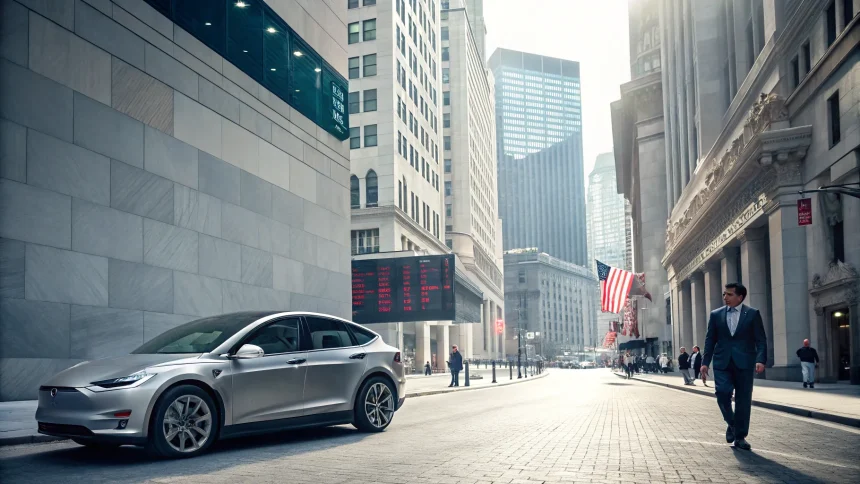
Investors remain split on Tesla, a company that can move markets with a tweet and whipsaw portfolios in a single session. Bulls see an AI-fueled future. Bears see slowing car sales and shrinking margins. The result is a stock that draws constant debate on Wall Street and social media, with stakes high for both sides.
“Tesla remains a top battleground stock.”
The tug-of-war turns on what Tesla is and what it will be. Is it a carmaker under pressure from price cuts and rising competition, or a tech company sitting on leapfrog software and robotics? The answer shapes valuations, forecasts, and plenty of heated arguments.
How Tesla Got Here
Tesla rose from niche EV pioneer to global brand in little more than a decade. Along the way, it drove the shift to electric cars, built factories on three continents, and turned its CEO into a cultural figure. That momentum powered massive stock gains, then sharp pullbacks. Swings in delivery numbers, price changes, and policy headlines have kept volatility high.
The company has also pushed into energy storage and charging, adding fresh storylines. Supporters argue those units can smooth the ups and downs of auto cycles. Skeptics counter they remain tied to the same EV demand trends, and that profits still hinge on cars.
The Market Split: Auto Versus Tech
At the center is valuation. Many automakers trade on earnings or cash flow from vehicles. Tesla’s multiple reflects a different bet: software and autonomy. Fans point to Full Self-Driving, the planned robotaxi network, and the Optimus humanoid robot as future engines of growth. Critics point out that regulatory approval, safety, and scale remain significant hurdles.
Margins are another fault line. Price cuts helped protect share but squeezed profitability. As competition from China, Europe, and legacy brands intensifies, Tesla must defend both volume and pricing. Any slip shows up fast in quarterly reports and, usually, the stock.
Competition, Policy, and the China Question
China is both a crown jewel and a risk. It’s a huge EV market with fierce local rivals and shifting policy. Supply chains can be tight, and trade actions can change costs overnight. Europe is tightening emissions rules, creating opportunity for EV adoption but more scrutiny on sourcing and subsidies. In the United States, incentives and charging standards shape demand and pricing power.
These crosscurrents feed the bull-bear standoff. For every sign of new demand, there’s a new model from a rival or a policy twist that rattles forecasts.
The AI Pitch—and Its Proof
Tesla’s AI narrative leans on its data advantage and in-house chips. The company claims billions of real-world miles to train driving models. Investors who buy the AI case believe software margins can dwarf auto margins over time. If robotaxis or licensing happen at scale, the upside case strengthens.
But milestones matter. Regulators must sign off. Safety has to be consistent across cities and weather. Timelines in autonomy have slipped across the industry. Bears say the gap between demo videos and daily reliability remains wide. Bulls counter that progress compounds once the core loop improves.
What the Numbers Need to Show
- Stable deliveries without deeper price cuts.
- Auto gross margins that hold or improve.
- Clear revenue from software, autonomy, or energy at scale.
- Regulatory wins that expand where advanced features can operate.
Any streak of quarters that checks those boxes could cool the debate. Misses or mixed signals would extend it.
Voices on the Street
Analysts remain wide apart. Some tag Tesla as an AI platform in waiting, with energy and charging as steady engines. Others model it as a premium automaker facing a crowded field. Fund managers split portfolios accordingly, with short interest and options activity amplifying big moves around earnings and deliveries.
What to Watch Next
Key catalysts line up the same way each quarter: deliveries, margins, software take rates, and updates on autonomy or robotaxis. Policy shifts—tariffs, safety rules, tax credits—can also swing the outlook. Factory expansion and model refreshes matter, especially if they boost efficiency and protect pricing.
The bottom line: Tesla’s story rests on execution in cars today and proof of software tomorrow. One strong quarter won’t settle it, and one weak quarter won’t end it. The fight continues because both paths are still open—and meaningful for the stock.
For now, the smartest stance may be simple: track the numbers, discount the noise, and watch how the company turns bold promises into measurable results. If it does, the tech label sticks. If not, the auto label bites. Either way, the next move is unlikely to be quiet.