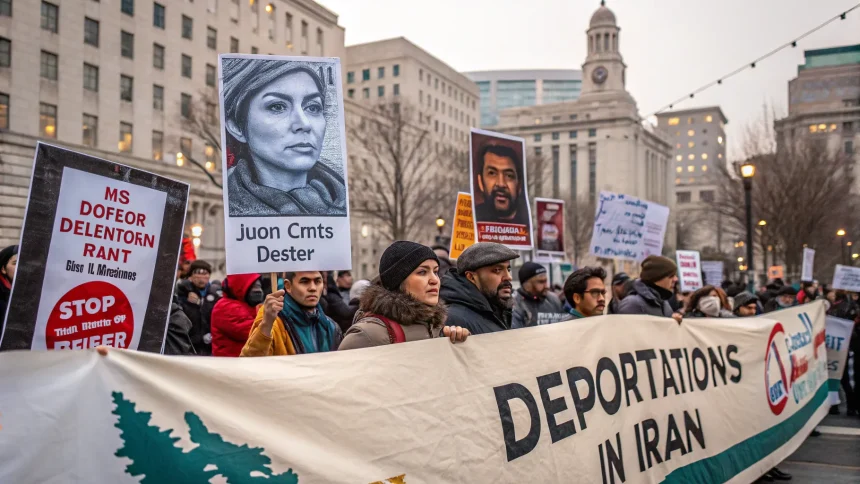
Rights groups are raising alarms over deportations from Iran as authorities intensify arrests of intellectuals and carry out executions at levels not seen in years. The warnings come as deportees, many of them migrants and asylum seekers, are being sent back across borders while civil society inside the country faces mounting pressure. Activists say the timing is no accident and argue the policies are linked, reflecting a broader push to silence dissent and control movement.
“Activists have expressed concern about the deportations as Tehran has been cracking down on intellectuals and executing prisoners at a rate unseen in decades.”
Deportations Stir Fears Across Borders
Advocates say deportations from Iran have surged, affecting migrants and asylum seekers who may face hardship or danger if returned. Many deportees are Afghans who fled conflict, drought, or Taliban rule, according to humanitarian groups. The International Organization for Migration has reported large-scale returns from Iran in recent years, describing patterns of rapid removals that strain border communities and aid agencies.
Humanitarian workers warn that swift removals limit time for screening and legal help. They say people with valid claims for protection may be sent back without review. Iran, which hosts millions of Afghans, argues it faces heavy costs and security risks and has stepped up checks on residency status.
Crackdown on Intellectuals Intensifies
Inside Iran, writers, academics, and cultural figures have faced heightened pressure since nationwide protests erupted in 2022. Lawyers and students report detentions, travel bans, and trials on security charges. Families say cases often move fast and in secrecy.
Independent groups describe a chill on speech. University lecturers have been dismissed or reassigned. Publishers have seen tighter vetting. “The message is clear: stay quiet or step aside,” said one regional analyst, who asked not to be named for safety.
Surge in Executions Draws Global Rebuke
Rights organizations say executions have climbed sharply. Iran Human Rights and Amnesty International reported that Iran carried out more than 800 executions in 2023, the highest figure in years. Many were for drug-related offenses, with others tied to security charges. The United Nations has urged Tehran to halt executions, calling for fair trials and transparency.
Authorities insist they are enforcing existing laws and targeting violent crime and narcotics networks. State media have framed executions as a deterrent. Legal experts counter that mass executions for drug offenses punish the poor and do little to dismantle trafficking operations.
Government Response and Regional Stakes
Officials in Tehran say border controls and deportations are lawful and necessary. They cite economic strain, limited public services, and security concerns. The government argues that it has carried a heavy burden for years, hosting large numbers of migrants with little international support.
Neighboring countries face the spillover. Rapid returns increase pressure on fragile economies and aid systems. Humanitarian groups warn that cross-border movement will not slow unless people feel safe and stable where they live. That requires jobs, education, and, they argue, fewer crackdowns.
What Activists Want Changed
- Temporary suspension of deportations for people at risk of harm.
- Access to legal review and independent monitoring at border points.
- Moratorium on executions, with fair-trial guarantees.
- Protection for scholars, journalists, and students facing reprisals.
Advocates also call on international donors to increase aid to communities receiving deportees. They say better support can reduce the pull of dangerous migration routes and help stabilize border regions.
Why It Matters Now
Taken together, deportations, arrests of intellectuals, and a spike in executions paint a stark picture. The policies reinforce each other, critics say, limiting space for dissent while pushing vulnerable people into limbo. The longer they continue, the harder they may be to unwind.
Iran’s leaders show no sign of changing course. But external pressure is building, and aid groups are documenting cases with more precision. The next test will be whether regional partners and international bodies can press for targeted steps: a pause on removals to danger, access to due process, and a slowdown in executions.
For now, the message from rights groups is blunt. The deportations are accelerating at the same time the state is tightening its grip at home. If that trend holds, they warn, more families will be split, more voices will go silent, and the region will carry the cost.