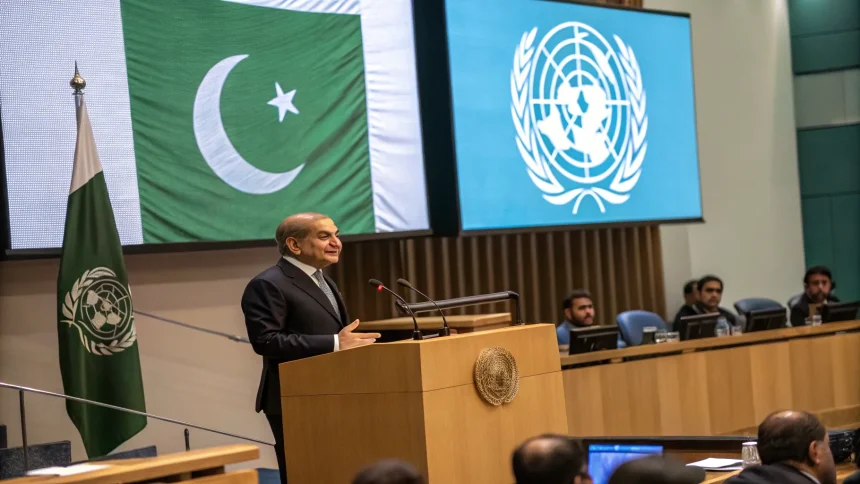
Pakistan’s new prime minister used the world’s biggest stage to sound an alarm: tens of millions in his country still face the fallout of catastrophic flooding. Addressing global leaders at the United Nations in New York, Shehbaz Sharif framed the crisis as a warning for every nation that lives under a changing climate—and asked for help to match the scale of the damage.
Sharif’s message was blunt and sweeping. He tied Pakistan’s hardship to a warming planet, argued for fairer climate finance, and reminded wealthier nations of their promises. The plea came as Pakistan scrambles to recover from historic floods that displaced communities, broke supply chains, and tested a fragile economy.
A Disaster With Global Echoes
The 2022 floods swamped large parts of Pakistan after record monsoon rains and glacial melt. Authorities said more than 33 million people were affected. Entire districts were under water for weeks. Bridges and roads vanished. Farms and homes washed away. The death toll climbed into the thousands, and disease followed the floodwaters.
Pakistan’s own tallies and international assessments put losses and damage in the tens of billions of dollars. The crisis hit while the country faced high inflation and a stop-and-go rescue program with the International Monetary Fund. It left little spare capacity for rebuilding at speed.
At the U.N., Sharif sought to turn that pain into a case for collective action. He framed the event as a climate shock made worse by factors far outside Pakistan’s control.
“As I stand here today to tell the story of my …”
He paused to ground the pitch in human terms: schools gone, fields ruined, families starting from scratch. The unfinished line made the point—some stories are still being written.
The Pitch: Fair Finance And Urgent Repairs
Pakistan wants quicker access to money that fixes damage and protects against the next storm. Officials have urged donor nations and lenders to ease terms and move funds faster. They argue that loans alone will not cut it for countries hit by climate shocks they did not cause.
- Faster disbursement of pledged recovery funds.
- Grants and insurance tools that do not pile on debt.
- Investment in resilient roads, housing, and irrigation.
- Support for early warning systems and flood control.
Sharif linked these demands to global climate talks, including the “loss and damage” fund discussed at recent summits. Pakistan has said that fund should move from talk to action.
Donors Weigh Conditions And Capacity
Donor governments and multilateral banks have signaled support but raised practical questions. Where will the money go first? Can projects be monitored? How will corruption risks be kept in check? These are routine checks, but they shape speed and size.
United Nations leaders have urged quicker aid, calling Pakistan’s floods a warning for a warmer world. Secretary-General António Guterres, who toured flood zones after the disaster, has pressed for more climate funding and debt relief mechanisms for vulnerable countries.
Economists point out the bind. Pakistan needs to rebuild without adding heavy new debts. But rebuilding itself is the only route to growth that can service existing debts. That tension sits at the heart of Sharif’s appeal.
Rebuilding On Shaky Ground
The recovery challenge is not just cash. It is also planning. Roads and homes rebuilt on flood plains may wash out again. Farmers need seeds and tools, but also drainage and storage. Cities must manage stormwater while keeping lights on during heat waves.
Officials have highlighted pilot projects for climate-smart housing and crop insurance. Aid groups have urged a focus on women and children, who faced high risks during displacement. Public health experts warn of waterborne disease after every monsoon, unless sanitation is upgraded.
What Sharif’s Appeal Signals
The speech placed Pakistan squarely in a larger fight over who pays for climate harm. It pressed wealthy countries to match pledges with cash and to rethink the terms of help. It also served as a reminder: climate shocks are no longer rare. They are schedules to plan around.
The stakes are clear. If funds arrive and are used well, Pakistan can rebuild stronger. If they stall, families may migrate, schools may never reopen, and the next flood could hit even harder. That is a story many nations know too well.
Sharif’s ask was simple, if not easy: move money faster, make it fair, and focus on people who lost the most. Watch the next climate talks and donor meetings for signs that the world heard him. The water has receded. The bill—and the test—remain.