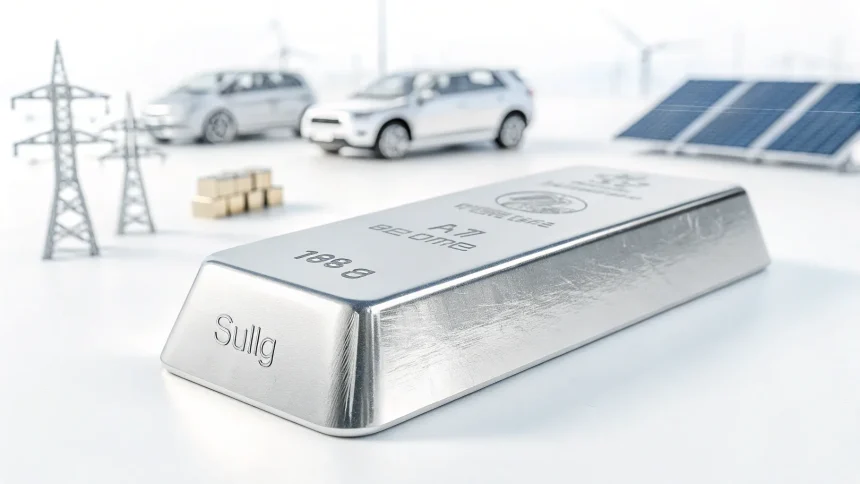
Industrial demand for silver is expected to soften in 2025 even as new uses expand in electric vehicles, AI hardware, and solar power. The mixed signal has investors and manufacturers weighing short-term pressures against longer-term growth markets.
The update matters to miners, refiners, and tech makers who rely on silver for its conductivity and thermal performance. It also adds a new wrinkle for policymakers and climate planners counting on clean-energy supply chains. The timing is sensitive, with carmakers and chip firms navigating cost controls and supply uncertainty next year.
“While industrial demand for silver is expected to decline slightly in 2025, the metal is increasingly used in electric vehicles, for AI components and in photovoltaics.”
Background: A Metal With Many Jobs
Silver’s industrial pull comes from its high electrical and thermal conductivity. It is used in wiring, switches, contacts, and solder across electronics. It is also a key ingredient in many solar cells and an additive in high-performance pastes.
Over the past decade, demand has shifted as consumer electronics matured and renewable energy scaled. Periods of price volatility have pushed some manufacturers to thrift, redesign, or substitute materials. These changes can trim usage in the short term even when new sectors are growing.
A slight decline next year could reflect inventory adjustments, efficiency gains in manufacturing, or cost-saving substitutions in lower-margin products. At the same time, structural trends in transport electrification and clean energy remain in place.
EVs and Photovoltaics: Growth Meets Efficiency
Automakers are increasing the use of silver in high-voltage wiring, battery management systems, inverters, and charging components. Each vehicle contains small but crucial amounts. As production scales, total consumption can rise even if engineers reduce silver per unit.
Solar manufacturers have trimmed silver loadings per cell through process improvements, but expanding solar deployments can offset those savings. New photovoltaic technologies may require different paste formulations, which could either raise or lower silver intensity per watt.
The result is a tug-of-war between efficiency and scale. A modest dip in 2025 does not erase multi-year growth in clean energy installations, but it signals that thrifting efforts remain effective.
AI Hardware: Small Volumes, High Value
AI data centers rely on servers, accelerators, and advanced interconnects that benefit from reliable conductivity and heat management. Silver supports contacts, solders, and specialized components. While volumes are smaller than in autos or solar, value per unit can be high.
Hardware cycles can be lumpy. Orders may surge as new chip generations launch and ease as customers digest capacity. That pattern can translate into uneven silver pull through the supply chain even when the long-run trend is upward.
Market Implications and Industry Response
A slight industrial dip could take some pressure off near-term supply tightness, but the outlook depends on investment and recycling flows. Fabricators may use the pause to qualify lower-silver designs or diversify suppliers.
Miners face a planning puzzle. Cutting capital spending risks shortages if EVs, AI, and solar demand rebound faster than expected. Over-investing risks price weakness if thrifting continues.
- Manufacturers may prioritize efficiency and substitution to manage costs.
- Developers could shift contracts to lock in pricing for 2025 installations.
- Recyclers might see steady volumes from electronics and auto scrap.
What to Watch in 2025
Several signals will shape the year. Automaker production targets for electric models will indicate whether scale overcomes efficiency savings. Solar installation pipelines and policy incentives will guide photovoltaic demand. Data center capital spending will show if AI hardware growth continues at its recent pace.
On the supply side, mine output, byproduct volumes from lead and zinc operations, and scrap recovery rates will influence availability. Technology shifts—such as lower-silver pastes or alternative contact materials—could change the balance again.
The latest guidance points to a mild retreat in industrial usage next year, but growth wedges remain intact in transport, power, and computing. For now, manufacturers appear focused on squeezing more performance from less metal, while long-horizon investors are watching the structural pull from EVs, AI components, and photovoltaics. The key question for 2025 is whether efficiency gains outpace the scale of these sectors—or if demand momentum reasserts itself as new projects move from plans to production.