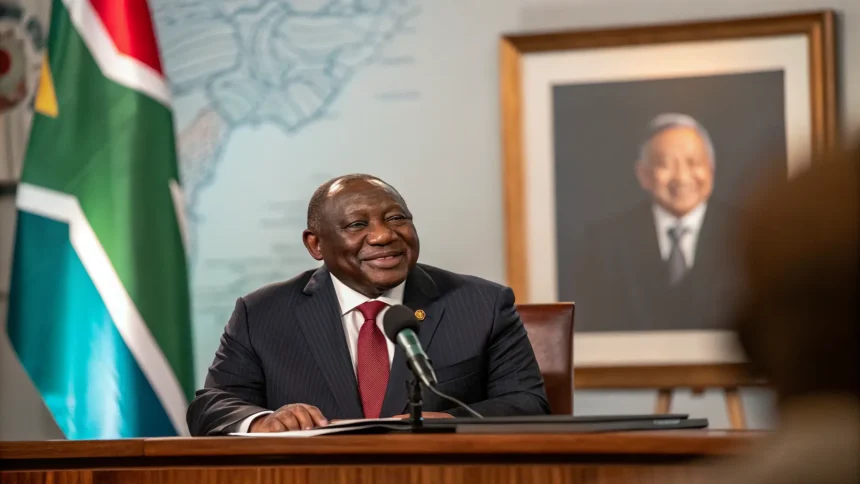
South African President Cyril Ramaphosa pushed back on Sunday against U.S. President Donald Trump’s threat to bar Pretoria from the 2026 G20 summit, calling the remarks “baseless” and stressing that South Africa remains a founding member of the group. In a national broadcast, Ramaphosa said the country would continue as a “full, active and constructive” participant, after Trump alleged “genocide against Afrikaners” and land seizures from white citizens.
G20 Membership and Host Powers
The G20 was formed in 1999 to bring major economies together for financial and policy coordination. South Africa was part of the original group and has attended every summit. The presidency rotates annually among members. The United States is set to host in 2026, following Brazil in 2024 and South Africa in 2025.
While the host manages logistics and can invite additional guests, excluding a member would be extraordinary and likely contested by other countries. The G20 operates by consensus and long-standing practice, rather than a formal charter that allows unilateral ejections.
Ramaphosa’s Response
“South Africa is and will remain a full, active and constructive member of the G20,” Ramaphosa said. He described the U.S. president’s comments as “blatant misinformation.”
Ramaphosa also rejected claims that his government targets white citizens for land confiscation. He framed the dispute as an attempt to politicize South Africa’s domestic debates.
The Claims and the Context
Trump repeated allegations of “genocide against Afrikaners,” a claim that has been circulated by some activists and commentators for years. The term genocide has a strict legal meaning under international law and requires specific intent to destroy a group. South African officials, human rights groups, and many researchers have challenged the characterization.
Land reform has been a heated issue in South Africa since the end of apartheid. Parliament has debated tools for redistribution, including limited expropriation under defined conditions. The government has said reforms aim to address historical dispossession while protecting the rule of law and food security. There is no official policy of blanket confiscation from any racial group.
Diplomatic Stakes for 2026
Analysts note that a move to block South Africa would fracture the G20 at a time of slow global growth and rising geopolitical tensions. South Africa is the only African G20 member state, and in 2023 the African Union was admitted as a permanent participant, increasing the group’s representation of the continent.
Diplomats typically resolve disputes through quiet consultation. Public threats, they warn, could complicate planning for the 2026 summit and distract from priorities such as debt relief, energy transitions, and trade rules.
Reactions at Home and Abroad
South African officials rallied behind Ramaphosa’s stance, arguing that membership is not subject to the will of a single host government. Business groups in Johannesburg cautioned that uncertainty around the summit could unsettle investor sentiment, even if exclusion remains unlikely.
In Washington, foreign policy voices urged the administration to avoid unilateral actions that could isolate the United States inside the forum it is scheduled to host. They pointed to the G20’s role in coordinating responses to financial shocks and global health crises.
Why the Dispute Matters
- The G20 shapes global economic agendas affecting debt, taxes, and development finance.
- Excluding a member could set a precedent for politicized participation.
- South Africa’s role is amplified as host in 2025 and as a conduit for African priorities.
What Comes Next
Attention now turns to the 2025 summit in South Africa, where Pretoria will set the agenda and demonstrate its capacity to broker compromises. A constructive outcome there could lower tensions ahead of the 2026 meeting in the United States.
Behind the scenes, member states are expected to weigh in to keep the group intact. With major economies facing inflation pressures and debt challenges, the cost of discord is high.
Ramaphosa’s message was clear: South Africa’s seat is not up for debate. The coming months will test whether G20 leaders prioritize stability over political theater. Watch for signals from other capitals, as quiet diplomacy and practical planning for the 2025 and 2026 summits will indicate whether this dispute fades or escalates into a wider standoff.