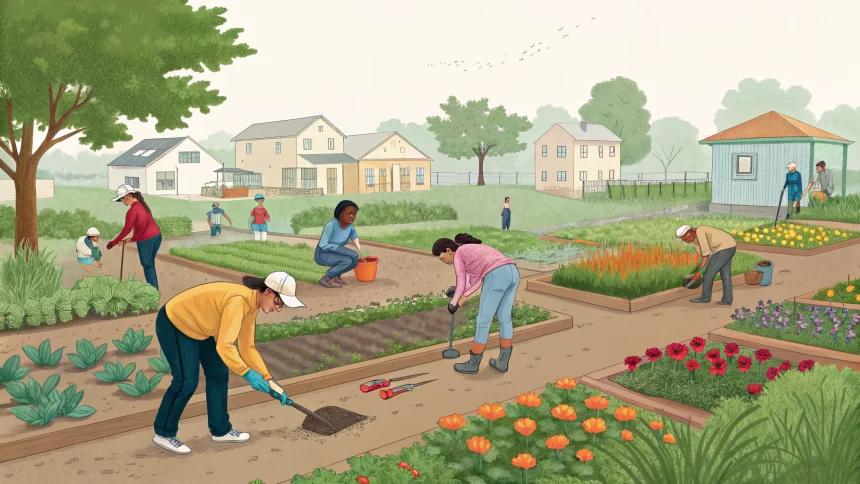
Across towns and cities, neighborhood groups say more people are showing up, chipping in, and sticking around. Organizers report rising interest in local, grassroots projects designed to meet everyday needs, from food access to safe streets. The shift is reshaping how communities respond to gaps in services and how residents define public problem-solving.
The trend comes as households juggle higher costs, local governments face tight budgets, and trust in big institutions runs thin. Residents are choosing practical fixes they can see: a fridge stocked at the corner church, a pocket park cleaned by the block club, or a traffic-calming pilot sketched on a folding table.
Why Neighbors Are Stepping Up
Organizers point to simple math. If a dozen people give an hour, a needed job gets done by Saturday. Many groups are low overhead, donor-supported, and quick to test ideas. They can match a service to a street, not just a city map.
“Organizers say that interest in local, grassroots initiatives to meet community needs has been growing.”
Volunteers describe three motives: visible results, a chance to learn skills, and control over priorities. The approach appeals to residents who want fewer meetings and more shovels, and to younger contributors who prefer short, goal-driven projects.
- Mutual aid networks that deliver diapers, produce, and hygiene kits.
- Neighborhood safety walks and lighting fixes near bus stops.
- Pop-up clinics for vaccines, mental health screenings, and naloxone training.
- School supply drives and weekend literacy pods at libraries.
Funding, Scale, and Staying Power
Most efforts start with small donations and microgrants. That money moves fast and comes with fewer strings, but it also runs out. Organizers say the push now is to blend support from residents, local businesses, and modest public dollars without losing agility.
There is a practical limit to volunteer stamina. Groups that last tend to standardize simple systems: recurring shifts, shared spreadsheets, and clear handoffs. Some create “starter kits” so a block in one zip code can copy what worked in another, while still fitting local needs.
City officials increasingly act as partners. Rather than build new programs, some departments loan tools, open data, or waive fees for small events. That support helps with scale and safety, while leaving design choices to the people closest to the problem.
Debate Over Role and Responsibility
Not everyone cheers the surge. Critics worry that neighbors are covering for services that should be guaranteed. They argue that patchwork fixes can hide deeper shortages in housing, transit, and public health.
Organizers counter that local action and strong public systems can exist together. Small projects can pilot ideas and feed data back to agencies. When a tool library logs broken smoke detectors by block, it can help target inspections and grants.
There is also a question of equity. Areas with more time and wealth can mobilize faster. To balance that, some groups share funds across neighborhoods, and regional coalitions help train new leaders rather than centralize control.
Signs of Momentum
Community hubs report fuller volunteer rosters and longer waitlists for training. Donation drives have become subscription-like, with monthly giving set up through mobile apps. Block captains talk about “small wins” that keep people engaged, such as a crosswalk repaint or a bus shelter repair logged and completed.
Several organizations track outcomes with simple measures: meals delivered, trees planted, or clinic no-shows reduced. The numbers are modest compared with large agencies, but the projects often serve as early warnings or fast interventions while bigger fixes move through budgets.
What To Watch Next
Three tests loom. First, can groups maintain volunteer energy as seasons change and personal schedules tighten. Second, will funders accept that programs may pivot month to month. Third, can local wins inform durable policy without getting bogged down in red tape.
If the current energy holds, expect more shared tool sheds, pantry networks, and micro-grants tied to measurable goals. Residents will keep asking for practical proof that their time and dollars work. Agencies will keep asking how to plug grassroots data into city plans.
The core story is simple and stubborn: people want results they can walk past on their way to work. With interest growing, the next phase is less about starting projects and more about teaching others to run them well. The most useful measure may be the handoff—when a first wave steps back and a new team keeps the lights on.