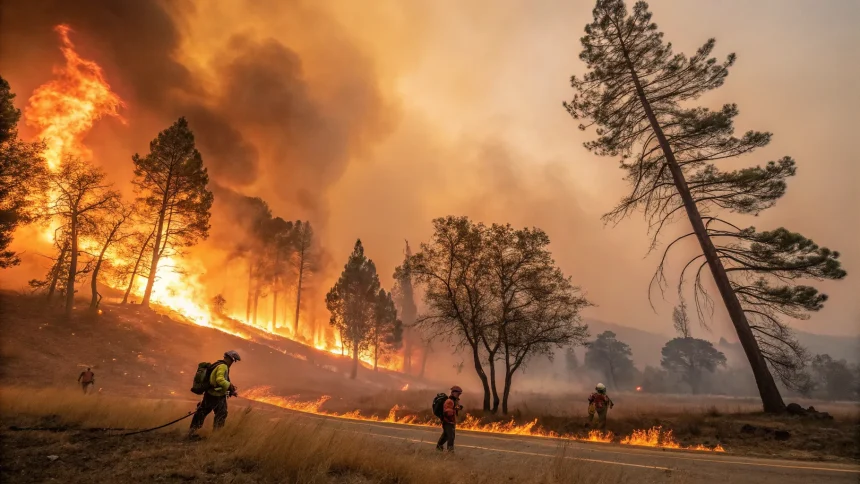
Rising temperatures are creating additional challenges for firefighters battling what has become California’s largest wildfire of 2023. The massive blaze in central California has injured four people as crews work to contain the spreading flames.
Firefighting teams have made small but steady progress against the fire, which continues to threaten communities and natural resources across the region. The combination of high temperatures and dry conditions has complicated containment efforts, according to officials managing the response.
Firefighter Injuries and Response Efforts
Four firefighters have sustained injuries while combating the wildfire, though authorities have not released details about the severity of these injuries or the circumstances in which they occurred. The injuries highlight the dangerous conditions facing those on the front lines.
Despite these challenges, fire crews have achieved what officials describe as “incremental progress” in their battle against the flames. This progress includes establishing containment lines in strategic locations and protecting critical infrastructure.
A spokesperson for the California Department of Forestry and Fire Protection noted that hundreds of firefighters are working around the clock in rotating shifts to maintain constant pressure on the blaze.
Weather Complications
The rising temperatures forecast for the region present a significant obstacle to containment efforts. Heat not only accelerates the drying of vegetation, creating more potential fuel, but also impacts the stamina and safety of firefighters working in already difficult conditions.
Meteorologists predict that temperatures in the affected area could climb several degrees in the coming days, potentially reversing some of the progress made by fire crews.
“When we see these temperature spikes, fire behavior typically becomes more erratic and intense,” explained a fire behavior analyst working with the incident command team. “Spot fires can occur more frequently, and the main fire can spread more rapidly.”
Scale and Impact
The central California wildfire has consumed thousands of acres of land, making it the largest fire event in the state this year. The blaze has forced evacuations in multiple communities and threatens both residential areas and natural resources.
Local officials have established evacuation centers for displaced residents, while animal shelters are accommodating pets and livestock from the affected areas. Community support networks have mobilized to provide assistance to those impacted by the fire.
The fire’s status as California’s largest of the year underscores concerns about the 2023 fire season, which still has months to go before its typical conclusion in late fall.
Environmental scientists point to several factors contributing to this year’s fire conditions:
- Drought conditions persisting in many parts of California
- Above-average temperatures throughout the spring and summer
- Accumulation of dry vegetation and fuel loads in wildland areas
State officials continue to monitor the situation closely, with additional resources being directed to the firefighting effort as needed. Air support, including water-dropping helicopters and retardant-dropping fixed-wing aircraft, has been deployed to assist ground crews.
As containment efforts continue, authorities urge residents in surrounding areas to remain vigilant, follow evacuation orders promptly, and prepare emergency plans in case the fire spreads to new locations.
The wildfire serves as a stark reminder of California’s increasing vulnerability to large-scale fire events, a trend that climate scientists attribute partly to changing weather patterns and warming temperatures across the western United States.